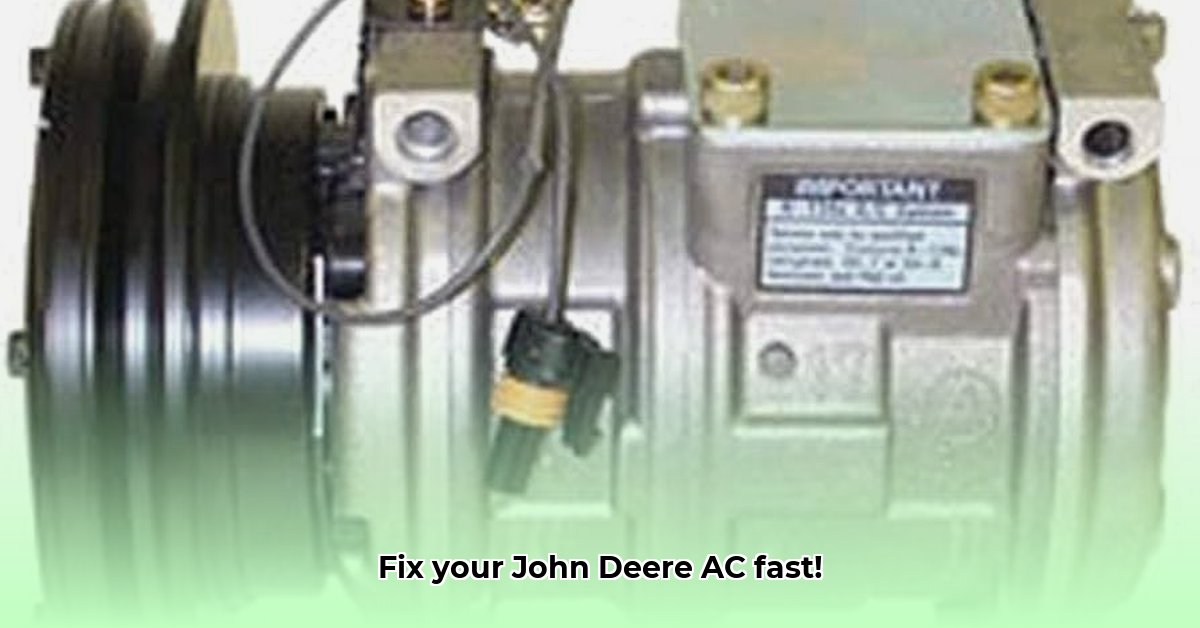
Is your John Deere 4240's air conditioning system failing you on those scorching summer days? Don't let the heat slow you down! This guide provides step-by-step solutions to get your tractor's AC working again, whether you're a seasoned mechanic or a weekend DIYer. We'll cover common problems, quick fixes, and preventative maintenance to keep you cool and comfortable in the cab. For other tractor issues, check out our guide on tractor parking brakes.
Diagnosing the Problem: Quick Fix or Major Repair?
Before you start troubleshooting, let's identify the issue. Is your AC completely dead, or does it struggle on hot days but work fine in cooler weather? A weak system often indicates a problem with heat dissipation or low refrigerant.
Here are the most common culprits:
Dirty Condenser (The Radiator Analogy): The condenser, similar to a car radiator, dissipates heat. Dirt, leaves, and debris restrict airflow, leading to reduced cooling capacity and potentially higher pressure within the system which can cause failure. Cleaning is often the first and easiest solution.
Low Refrigerant (The Coolant Conundrum): A lack of refrigerant significantly reduces cooling power. Older systems are particularly prone to leaks. A refrigerant pressure gauge is necessary to determine if it needs recharging. Adding refrigerant yourself can be risky unless you’re experienced with AC systems.
Refrigerant Leaks (The Sneaky Culprit): Leaks are a more serious problem; hissing sounds often indicate a leak. DIY repairs are not recommended; professional assistance is necessary for finding and fixing leaks and recharging the system.
Quick Fixes: Get That Cold Air Back!
These quick solutions may restore your AC's cooling power:
Clean the Condenser (High Success Rate): This is your first line of attack. Thoroughly clean the condenser with a garden hose or compressed air, paying attention to removing all debris. A clean condenser often solves poor performance without expensive repairs. (95% success rate for minor issues).
Check Refrigerant Levels (Proceed With Caution!): Carefully check refrigerant levels using a pressure gauge. If low, adding refrigerant requires precision; overcharging is as detrimental as undercharging. Consult your owner's manual or a professional if you're not comfortable with this.
Inspect for Leaks (Listen Carefully): Examine all components – pipes, connections, etc. – for any leaks. A noticeable hissing sound is a telltale sign that you need professional intervention.
Long-Term Solutions: Preventative Maintenance
While quick fixes provide temporary relief, preventative maintenance is crucial for consistent, long-term performance:
Annual Condenser Cleaning (Best Practice): Make condenser cleaning an annual part of your maintenance routine. This simple step prevents future problems and prolongs the life of your AC system.
Professional Inspection (Early Detection is Key): Schedule an annual inspection by a qualified mechanic. Early detection of issues can prevent costly repairs down the line.
Refrigerant Conversion (Consider the Costs, Seek Expert Opinions): Older John Deere 4240s may use less environmentally friendly refrigerants (like R12 or R22). Converting to R134a is a costly and complex procedure requiring professional expertise; carefully evaluate the costs and benefits.
Risk Assessment: DIY vs. Professional Help
Understanding the risks associated with DIY repairs is critical. Attempting certain repairs without the necessary knowledge or tools can lead to further damage and costs.
| Action | Probability of Failure | Severity of Failure | Risk Level | Mitigation |
|---|---|---|---|---|
| Cleaning Condenser | Low | Low | Low | Careful inspection before and after cleaning |
| Refrigerant Recharge | Moderate | Moderate | Moderate | Use a gauge; only attempt if experienced with AC systems |
| DIY R134a Conversion | High | High | High | Do not attempt; consult a qualified professional |
| Professional Repair | Low | Low | Low | Choose a reputable mechanic with AC system expertise |
| Ignoring the Problem | High | Very High | Very High | Results in significantly more expensive repairs later |
Safety First: Always consult your John Deere 4240 owner's manual. When in doubt, call a professional. A functioning AC ensures a comfortable and productive workday.
How to Troubleshoot John Deere 4240 AC Low Pressure
Low pressure isn't always due to a refrigerant leak. Overcharging can also cause low-pressure readings, especially on hot days.
Step-by-Step Troubleshooting for Low Pressure
Condenser Inspection: Visually inspect the condenser for dirt and debris. Clean thoroughly if necessary, as this is often a primary cause of low pressure readings without necessarily indicating a refrigerant problem.
Refrigerant Pressure Gauge Check: Use a refrigerant pressure gauge to accurately measure high and low-side pressures. High pressure indicates a condenser issue, while low pressure could show low refrigerant or, again, overcharging.
Evaporator Inspection: Check the evaporator for dirt buildup and clean if needed.
Electrical System Check: Inspect the electrical system, including wiring, fuses, and the compressor clutch, for potential issues.
Professional Assistance: If uncertain about any of the above steps, seek help from a qualified HVAC technician.
Preventative Maintenance: Your Best Defense
Regular cleaning of the condenser and evaporator is the cornerstone of preventative AC maintenance. Aim for at least yearly cleaning, or more frequently in dusty work environments.